
2025 AI Landscape: Navigating the Human-Centric Imperative Amidst Breakthroughs from OpenAI, Google, and Meta
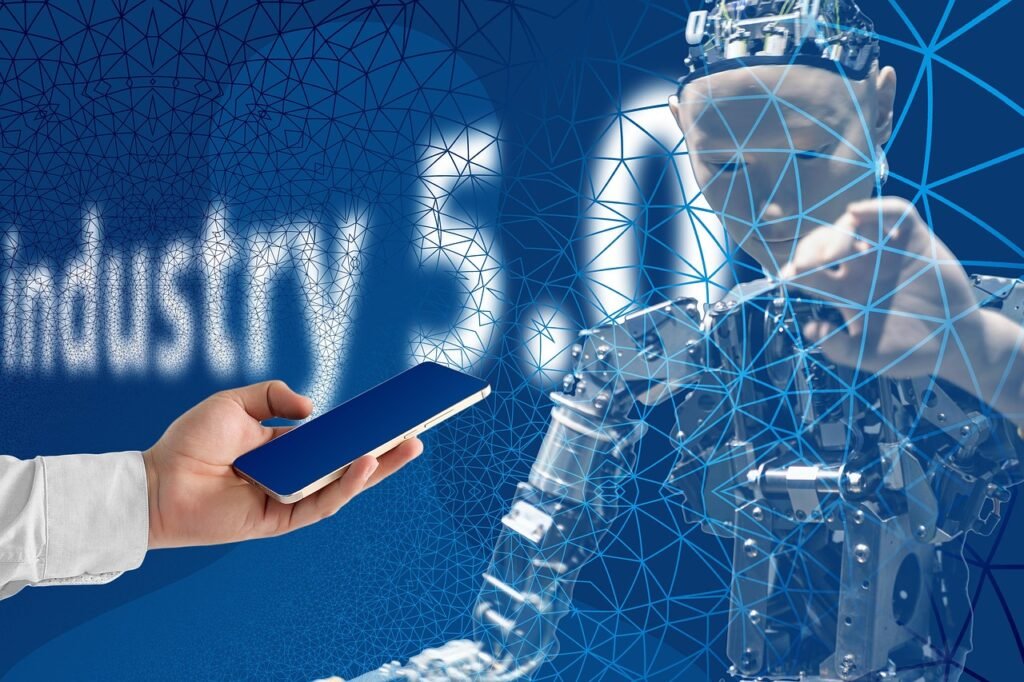
The year 2025 finds the business world at a critical juncture, grappling with the profound implications of rapid artificial intelligence advancements witnessed throughout 2024. While trailblazing releases from industry giants like OpenAI, Google, and Meta have pushed the boundaries of what AI can achieve, a parallel imperative is emerging: ensuring these powerful tools augment, rather than displace, human capabilities. Research indicates a significant shift in job skill requirements, with TalentNeuron finding that three-quarters of jobs saw over 40% of their required skills change between 2016 and 2019, underscoring the need for proactive talent strategies. This evolving landscape demands a human-centric approach, focusing on empowering workforces and fostering ethical AI integration to unlock true business value.
The past year, 2024, was undeniably transformative for artificial intelligence. As noted by Sophia Velastegui, a C200 member and former Microsoft Chief AI Technology Officer, 2024 marked an accelerated pace of innovation, with established players like Google and Microsoft vying for market share against agile startups. This competitive fervor resulted in several key trends that are now shaping the trajectory of AI in 2025 and beyond. These advancements, while technologically impressive, have also brought to the forefront crucial discussions around regulation, ethics, and the very definition of AI’s role in society.
The year 2024 witnessed groundbreaking releases that have significantly altered the AI paradigm. OpenAI’s GPT-4o, Google’s Gemini 2.0 paired with its Willow quantum chip, Meta’s robust open-source initiatives, and Anthropic’s Claude 3 series have dominated headlines. These developments, as highlighted by opentools.ai, represent a paradigm shift, moving beyond single-modal AI to embrace increasingly sophisticated multimodal capabilities. This means AI systems can now process and understand information from various sources simultaneously – text, images, audio, and video – leading to richer, more nuanced interactions and applications.
For instance, GPT-4o’s ability to process audio and visual inputs in real-time allows for more natural and intuitive human-computer interaction. Google’s Gemini 2.0, especially when considered alongside the potential of the Willow quantum chip, points towards a future where AI can tackle even more complex computational challenges, potentially accelerating scientific discovery and enterprise-level problem-solving. Meta’s commitment to open-source AI, meanwhile, democratizes access to cutting-edge technology, fostering a collaborative environment for innovation and rapid iteration. This approach, while fostering broad adoption, also necessitates a careful consideration of responsible deployment and governance.
The trend towards multimodal AI is not merely an academic exercise; it has tangible implications for business. Imagine a customer support agent who can not only understand a customer’s written query but also analyze an uploaded image of a faulty product or listen to a voice recording describing an issue. This level of contextual understanding, powered by multimodal AI, can lead to faster, more accurate, and ultimately more satisfying customer resolutions. Similarly, in product development, teams can leverage AI to analyze visual prototypes alongside design specifications and user feedback, accelerating the iteration cycle.
The ‘Human’ Angle/Challenge: Bridging the Skill Gap and Ensuring Ethical Application
While the technological leaps of 2024 are undeniable, they simultaneously amplify the “human angle” – the critical need to integrate these powerful AI tools ethically and effectively into existing workflows. The rapid pace of AI advancement, as observed by aimagazine.com, has not come without challenges, including increased regulation, ethical debates, and concerns about energy consumption. For B2B decision-makers, the primary challenge lies in ensuring that AI empowers their workforce rather than creating a chasm of outdated skills.
TalentNeuron’s research vividly illustrates this challenge: with three-quarters of jobs experiencing significant skill shifts between 2016 and 2019, the notion of static roles is obsolete. AI’s impact necessitates a proactive talent strategy that focuses on evolving existing roles rather than simply eliminating them. This means identifying which aspects of a job can be automated or augmented by AI and then investing in upskilling and reskilling employees to work alongside these new technologies. The risk of AI impact on a role, coupled with the proportion of digital dexterity skills required, should inform leadership decisions on how to adapt.
Furthermore, the mainstreaming of Ethical AI, as discussed by ladyact.org, is no longer a philosophical debate but a practical necessity. As AI becomes more embedded in daily operations, ensuring its fairness, transparency, and accountability is paramount. This is particularly true in B2B contexts where AI decisions can have significant financial or operational consequences. The rise of responsible AI, moving from principle to practice, means businesses must actively consider the ethical implications of the AI models they adopt and the data they use to train them. This requires a conscious effort to build AI systems that foster connection, creativity, and equity, rather than exacerbating existing societal inequalities.
The dichotomy between soaring consumer AI usage and lagging business adoption, as reported by Forbes, further highlights this human-centric challenge. While individuals may be experimenting with AI tools in their personal lives, many businesses are still navigating the complexities of strategic implementation, organizational change, and workforce readiness. This lag is not necessarily due to a lack of available technology, but rather the intricate process of integrating AI into established business processes while ensuring human employees are equipped and comfortable with these changes.
The IdeasCreate Solution Framework: Empowering Humans for an AI-Augmented Future
Recognizing this complex interplay between technological advancement and human readiness, IdeasCreate advocates for a human-centric AI implementation framework. This framework is built on the foundational principle that AI’s true potential is unlocked when it serves to augment human capabilities, fostering collaboration and enhancing creativity, rather than aiming for outright replacement.
The cornerstone of the IdeasCreate approach is comprehensive staff training. This goes beyond basic technical instruction on how to use new AI tools. It involves developing a deep understanding of how AI can enhance specific job functions, teaching employees how to interpret AI outputs critically, and cultivating the skills necessary for effective human-AI collaboration. For example, when implementing a new multimodal AI tool for customer service, training would not only cover its technical operation but also emphasize active listening, empathetic communication, and how to leverage AI-generated insights to provide more personalized and effective support. This approach aligns with TalentNeuron’s findings by proactively addressing the evolving skill requirements of jobs impacted by AI.
Crucially, the IdeasCreate framework emphasizes cultural fit. Introducing AI into an organization is not solely a technological project; it is a significant cultural shift. IdeasCreate works with B2B decision-makers to foster an organizational culture that embraces AI as a partner. This involves open communication about the benefits and limitations of AI, addressing employee concerns and anxieties proactively, and celebrating successful human-AI collaborations. Building trust and psychological safety around AI adoption is vital. When employees feel empowered and supported through this transition, they are more likely to embrace AI tools and contribute to their effective implementation.
This cultural integration is also about fostering a mindset of continuous learning and adaptation. The rapid evolution of AI, exemplified by releases like GPT-4o and Gemini 2.0, means that the skills required today will likely evolve further tomorrow. IdeasCreate helps organizations build internal capabilities for ongoing learning, ensuring that their workforce remains agile and prepared for future AI developments. This proactive stance is far more effective than a reactive approach that waits until skills gaps become critical.
By focusing on these pillars – robust training, thoughtful cultural integration, and a commitment to augmenting human potential – IdeasCreate empowers businesses to navigate the complexities of the 2025 AI landscape. This approach ensures that AI adoption leads to enhanced productivity, improved decision-making, and a more engaged and skilled workforce, all while upholding ethical considerations and fostering positive societal impact.
Conclusion: Embracing the Augmented Human in the Age of AI
The year 2025 stands as a testament to the accelerating pace of AI innovation, marked by significant breakthroughs from leaders like OpenAI, Google, and Meta. Multimodal AI and open-source initiatives are reshaping industries, offering unprecedented opportunities for efficiency and creativity. However, the true measure of success in this new era will be how effectively businesses integrate these powerful tools in a human-centric manner.
The imperative is clear: businesses must move beyond the hype and focus on empowering their human capital. This involves understanding the evolving skill demands, as highlighted by TalentNeuron’s research, and proactively investing in training and development. Simultaneously, fostering an ethical AI culture is no longer optional but a fundamental requirement for responsible innovation.
By adopting a framework that prioritizes staff training and cultural fit, organizations can ensure that AI serves as a catalyst for human augmentation, leading to more resilient, adaptable, and forward-thinking enterprises. The future of business lies not in replacing humans with AI, but in forging a powerful synergy between them.
Call to Action
To navigate the complexities of AI implementation and ensure your organization thrives in this rapidly evolving landscape, contact IdeasCreate for a custom consultation. Discover how a human-centric AI strategy can empower your workforce and drive sustainable business growth.