
Claude Opus 4.5 Sets New Benchmark: Why B2B Leaders Must Prioritize Human Augmentation Over AI Supremacy in 2025
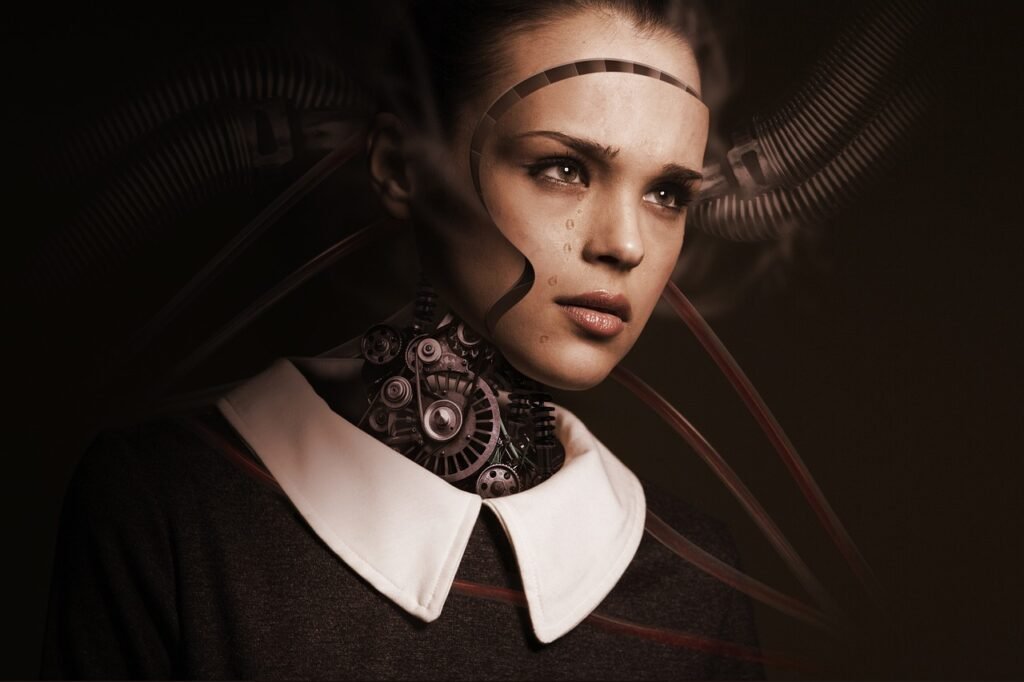
December 2025 – The artificial intelligence landscape continues its rapid evolution, with recent advancements pushing the boundaries of machine capabilities. Anthropic’s release of Claude Opus 4.5, a model that reportedly outperformed all human engineering candidates in internal company tests, has set a new benchmark for AI performance. This development, while impressive, underscores a critical imperative for B2B decision-makers as they navigate 2025: the strategic integration of AI must prioritize augmenting human expertise, not aiming for its outright replacement. The focus must shift from AI supremacy to human-centric AI implementation, ensuring technology serves as a powerful collaborator, not a sole actor.
The implications of AI’s growing sophistication are far-reaching. Research from TalentNeuron, for instance, highlighted that a significant three-quarters of jobs experienced over 40% of their required skills change between 2016 and 2019. This demonstrates a pre-existing trend of dynamic skill requirements, a trend that AI is now accelerating. As organizations grapple with these shifts, the temptation to view AI as a solution for skill gaps or for automating entire roles becomes understandable. However, a purely automation-centric approach risks overlooking the unique value human creativity, critical thinking, and emotional intelligence bring to business processes.
The dominant AI narrative of late 2025 continues to be shaped by significant model releases and their performance metrics. Anthropic’s Claude Opus 4.5 has emerged as a notable contender, making headlines for its reported ability to surpass human engineering candidates in internal assessments. This achievement signifies a leap in AI’s capacity for complex problem-solving and technical execution. Such advancements are not isolated; the AI market in November 2025 was described as “very productive,” with numerous product launches and model releases contributing to this dynamic environment. Fujitsu’s development of a multi-AI agent also points towards more sophisticated and integrated AI systems on the horizon.
While the performance of models like Claude Opus 4.5 is undeniably impressive and indicative of AI’s growing power, it presents a crucial point of reflection for B2B leaders. The focus on outperforming humans in specific tasks, while a valid metric for AI development, can inadvertently steer strategic thinking towards a competitive rather than collaborative model. The question for businesses becomes: how can this heightened AI capability be leveraged to elevate human performance, rather than to displace it?
The ‘Human’ Angle/Challenge: Navigating the AI Performance Paradox
The challenge for B2B decision-makers in 2025 lies in reconciling the rapidly advancing capabilities of AI with the indispensable role of human workers. The very success of models like Claude Opus 4.5 in technical evaluations creates a perception that AI can indeed “do it all.” However, this perspective often overlooks the nuances of business operations that extend beyond quantifiable task completion.
Consider the realm of content creation, a critical function for B2B organizations. While AI can now generate content with remarkable speed and efficiency – potentially reaching high levels of output, as suggested by anecdotal observations of AI content acceleration – the depth of understanding, strategic foresight, and authentic brand voice required for truly impactful thought leadership remains a human domain. An AI might be able to draft a technically sound report, but can it truly empathize with a client’s pain points, anticipate future market shifts with nuanced intuition, or craft a narrative that resonates on an emotional level?
The TalentNeuron research, indicating substantial skill shifts in jobs, also points to the adaptability of the human workforce. However, this adaptation requires guidance, training, and a clear understanding of how new technologies integrate into existing roles. If AI is positioned solely as a tool to automate tasks previously performed by humans, it risks creating a workforce that is either redundant or deskilled, rather than one that is empowered and enhanced. This creates a significant “human angle” challenge: ensuring that AI integration fosters a culture of continuous learning and upskilling, where employees are equipped to leverage AI as a partner.
Furthermore, the drive for efficiency through AI must not come at the cost of originality and authenticity. In an era where AI can generate vast amounts of content, distinguishing genuine insight from algorithmically produced text becomes paramount for building trust and credibility. B2B decision-makers must guard against an over-reliance on AI that could lead to generic, undifferentiated content, ultimately undermining brand authority. The “human touch” is not merely about sentiment; it is about the unique perspective, lived experience, and strategic judgment that AI, at its current stage of development, cannot replicate.
The IdeasCreate Solution Framework: Fostering Human-Centric AI Integration
Recognizing these challenges, a proactive and human-centric approach to AI implementation is essential for B2B organizations in 2025. IdeasCreate advocates for a framework that prioritizes the augmentation of human capabilities, grounded in robust staff training and a deliberate focus on cultural fit.
1. Strategic Staff Training and Upskilling: The dynamic nature of job skills, as evidenced by TalentNeuron’s research, necessitates a commitment to ongoing learning. Instead of viewing AI as a replacement for existing roles, businesses should invest in training programs that equip employees with the skills to effectively collaborate with AI tools. This includes training on prompt engineering for advanced models like Claude Opus 4.5, understanding AI outputs, and critically evaluating AI-generated information. For instance, content strategists can be trained to use AI as a research assistant and first-draft generator, freeing them to focus on higher-level strategic thinking, narrative development, and ensuring brand voice consistency. This approach transforms AI from a potential threat into a powerful productivity enhancer.
2. Cultivating a Collaborative AI Culture: The successful integration of AI is not solely a technological challenge; it is also a cultural one. Organizations must foster an environment where AI is perceived as a tool to empower employees and drive innovation, rather than a mechanism for cost-cutting through automation. This requires transparent communication about AI initiatives, involving employees in the decision-making process, and celebrating successes that arise from human-AI collaboration. Building a culture that embraces AI as a partner, where employees feel valued and supported in adapting to new technologies, is crucial for mitigating resistance and maximizing adoption.
3. Emphasizing AI as an Augmentation Tool: The core of IdeasCreate’s philosophy is that AI should amplify, not replace, human expertise. This means strategically identifying areas where AI can automate repetitive tasks, accelerate data analysis, or generate initial drafts, thereby freeing up human professionals to focus on complex problem-solving, creative ideation, and strategic decision-making. For example, in a marketing context, AI can analyze vast datasets to identify customer trends, but human marketers are needed to interpret these trends, develop nuanced campaign strategies, and build authentic relationships with clients. The goal is to leverage AI to enhance the decision-making capabilities and creative output of human teams.
4. Infrastructure for Connectivity and Collaboration: As highlighted by research suggesting the need for strategically placed data centers for maximum connectivity, the underlying infrastructure plays a vital role in enabling effective AI integration. Telehouse, for instance, emphasizes the importance of colocation solutions that provide direct access to internet exchanges and cloud providers, facilitating faster content delivery and improved service diversification. For B2B organizations, ensuring robust and reliable IT infrastructure is a prerequisite for seamless AI deployment and for enabling distributed teams to collaborate effectively with AI tools. This includes considering global connectivity and direct access to essential cloud services that power AI applications.
Conclusion: The Future is Collaborative, Not Competitive
The advancements in AI, exemplified by models like Anthropic’s Claude Opus 4.5, present a transformative opportunity for B2B organizations. However, the narrative of AI outperforming humans in specific tasks should not lead to a strategy of AI supremacy. Instead, the focus for 2025 must be on a human-centric AI implementation that recognizes and enhances the unique strengths of human professionals.
By investing in strategic staff training, fostering a collaborative AI culture, and viewing AI as an augmentation tool rather than a replacement, B2B decision-makers can navigate the evolving technological landscape effectively. This approach ensures that AI drives efficiency and innovation while preserving the critical elements of human judgment, creativity, and authenticity that are essential for long-term business success and genuine thought leadership. The future of business is not about pitting humans against machines, but about forging powerful collaborations that unlock unprecedented potential.
Is your organization prepared to harness the power of human-centric AI in 2025? Contact IdeasCreate for a custom consultation to develop a strategy that amplifies your team’s expertise and positions your business for future success.