
2025’s AI Infrastructure Imperative: Why Telehouse and Strategic Data Centers Underpin Human-Centric AI Growth
As December 2025 unfolds, the transformative power of artificial intelligence (AI) is no longer a nascent whisper; it has become a “deafening roar of breakthroughs,” as noted by dansasser.me. The year 2024 was pivotal, solidifying AI as a “cornerstone of innovation” across sectors, from healthcare to agriculture. However, this unprecedented growth, driven by advancements like OpenAI’s new models, Google’s Gemini series, and the burgeoning rise of agentic AI, brings with it a critical, often overlooked, requirement: robust and strategically positioned infrastructure. For B2B decision-makers navigating the rapidly evolving AI landscape, understanding this infrastructure imperative is paramount to successfully implementing human-centric AI solutions that augment, rather than replace, human capabilities.
The discourse surrounding AI’s impact on the workforce often centers on skills and job evolution. Research from TalentNeuron, cited by duckduckgo.com, revealed that a staggering three-quarters of jobs experienced more than a 40% change in required skills between 2016 and 2019. This trend underscores the dynamic nature of the modern workplace, where static roles are increasingly obsolete. While this necessitates a focus on upskilling and evolving talent strategies, the foundational layer enabling these AI-driven transformations is often underestimated. AI is indeed helping businesses “improve efficiency, innovate faster and make smarter decisions,” but this efficacy is intrinsically linked to the “right infrastructure in place,” as highlighted by duckduckgo.com.
The year 2024 witnessed significant leaps in AI capabilities, particularly with the emergence of multimodal AI and generative AI pushing boundaries, as reported by aimagazine.com. These technologies, capable of understanding and generating content across various formats like text, images, and audio, are at the forefront of AI innovation. Complementing this is the rise of “agentic AI,” systems designed to autonomously perform tasks and interact with digital environments. OpenAI’s Projects feature, which simplified workflows for developers and businesses, and Google’s Gemini models, which enhanced collaboration and creativity, are prime examples of AI’s expanding reach into practical business applications.
These advanced AI models, especially agentic AI, are inherently data-intensive and computationally demanding. They require immense processing power, low latency for real-time decision-making, and secure, high-bandwidth connectivity to function optimally. The complexity of multimodal AI, which processes and integrates information from diverse sources, further escalates these infrastructure needs. For B2B enterprises aiming to leverage human-centric AI for sophisticated content generation, personalized customer experiences, or streamlined operational workflows, the underlying infrastructure becomes a critical bottleneck if not adequately addressed. The promise of AI-generated content, as explored by opentools.ai, is directly tied to the ability to deploy and manage these powerful models effectively.
The ‘Human’ Angle: Bridging the Infrastructure Gap for Empathetic Augmentation
While the technological advancements are exciting, the “human” angle in human-centric AI implementation often hinges on how well these AI tools can be integrated into existing human workflows and how they empower human decision-makers. The challenge arises when the infrastructure supporting these AI capabilities is not aligned with human operational needs. For instance, if an AI content strategist, augmented by generative AI, cannot access or process data quickly due to network limitations or inadequate processing power, its ability to provide timely, relevant insights is severely hampered. This disconnect can lead to frustration, reduced productivity, and a failure to realize the full potential of AI as an augmenting force.
The aspiration of human-centric AI is to create a symbiotic relationship where AI handles repetitive tasks, analyzes vast datasets, and identifies patterns, thereby freeing up human professionals to focus on higher-level strategic thinking, creativity, ethical considerations, and building genuine relationships. This requires AI systems that are not only intelligent but also accessible, reliable, and seamlessly integrated. Without the right infrastructure, the “empathy gap” that human-centric AI seeks to bridge can widen, as AI-powered tools become perceived as distant, unresponsive, or even detrimental to human workflows. The reliance on infrastructure, such as strategically placed data centers, directly impacts the speed and reliability of AI outputs, which in turn affects the user experience for human professionals.
The IdeasCreate Solution Framework: Strategic Infrastructure as the Bedrock of Human-Centric AI
IdeasCreate recognizes that truly human-centric AI implementation extends beyond software and algorithms; it is deeply rooted in the physical and network infrastructure that supports these advanced technologies. The company’s framework emphasizes a holistic approach, where robust data center solutions and strategic connectivity are foundational pillars for enabling effective AI augmentation.
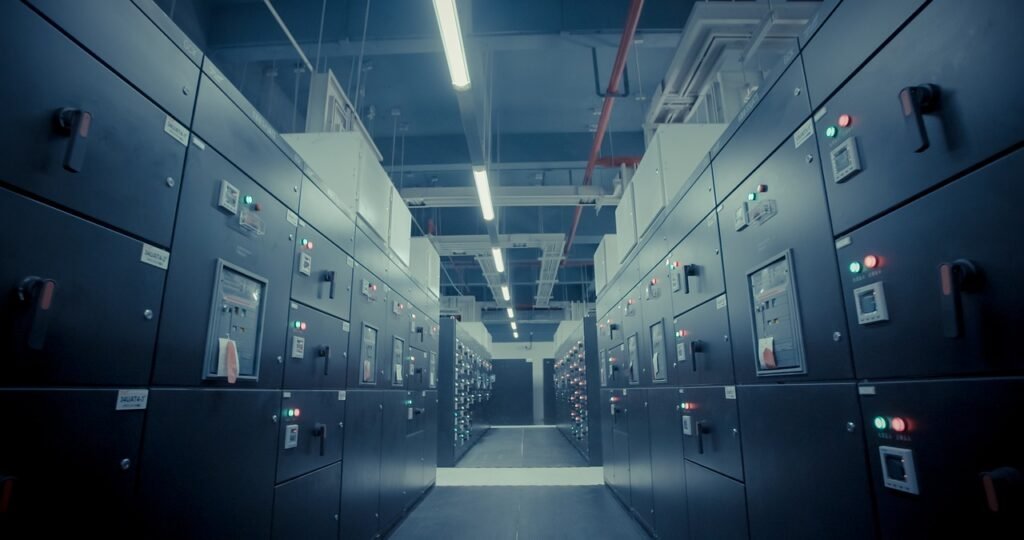
A key component of this framework involves leveraging strategically placed data centers, akin to the offerings described by Telehouse in their global webinar. These data centers provide the necessary colocation solutions for IT infrastructure, ensuring “maximum connectivity” and direct access to critical internet exchanges and leading cloud providers. For B2B organizations, this means that AI models, whether for content generation, data analysis, or predictive modeling, can operate with optimal performance. When AI has direct access to the “most important internet exchanges across the world” and connects directly to a “range of the world’s leading public and private cloud providers,” the latency is reduced, and the speed of data processing is enhanced. This is crucial for real-time AI applications and for ensuring that AI-generated insights are delivered when human decision-makers need them most.
Furthermore, the “international routes” offered by such providers allow organizations to “expand their organisation’s reach throughout the globe.” This global connectivity is essential for B2B companies operating across different regions, enabling AI to support localized content creation, global customer service, and distributed team collaboration. The ability to “make new connections to improve and diversify services and deliver content faster” is directly facilitated by this advanced infrastructure. IdeasCreate’s approach integrates this understanding of infrastructure into its human-centric AI strategies. This involves:
1. Needs Assessment and Infrastructure Audit: Before deploying any AI solution, IdeasCreate collaborates with B2B clients to assess their current and future infrastructure requirements. This includes evaluating existing data center capabilities, network bandwidth, and cloud integrations.
2. Strategic Infrastructure Planning: Based on the audit, IdeasCreate helps clients identify and implement the most suitable data center colocation solutions and network strategies. This might involve recommending Telehouse’s strategically placed data centers for enhanced connectivity and access to global internet exchanges, ensuring that AI applications have the performant backbone they require.
3. Integration of AI Workflows: The focus is on seamlessly integrating AI tools into existing workflows, ensuring that the AI’s performance is not hindered by infrastructure limitations. This includes optimizing data pipelines, ensuring secure data transfer, and enabling low-latency access to AI models.
4. Staff Training and Cultural Fit: Complementing the technical infrastructure, IdeasCreate prioritizes staff training. This ensures that employees understand how to leverage AI-powered tools effectively, fostering a culture where AI is seen as a partner in augmenting human capabilities. The “human-centric” aspect is reinforced by equipping individuals with the skills and confidence to work alongside AI, rather than feeling threatened by it. This aligns with the idea that “organizations have multiple options for roles impacted by artificial intelligence beyond simply eliminating them,” as suggested by duckduckgo.com. By focusing on augmentation and skill evolution, IdeasCreate helps businesses navigate the AI skillquake.
5. Continuous Optimization: The AI landscape and infrastructure needs are constantly evolving. IdeasCreate’s framework includes provisions for continuous monitoring and optimization of both AI performance and the underlying infrastructure to ensure sustained value and adaptability.
By addressing the infrastructure imperative head-on, IdeasCreate enables its B2B clients to move beyond theoretical AI benefits and realize tangible improvements in efficiency, innovation, and decision-making, all while keeping the human element at the core of their AI strategy.
Conclusion: Building the Future of B2B with Human-Centric AI and Robust Infrastructure
The year 2025 stands as a testament to the rapid maturation of artificial intelligence. From revolutionary multimodal models to the practical application of agentic AI, the technology is fundamentally reshaping how businesses operate. However, the true success of human-centric AI is not solely dependent on the sophistication of the algorithms but critically on the infrastructure that powers them. As businesses like Telehouse demonstrate, strategically placed data centers and optimized connectivity are not mere supporting elements; they are indispensable components for unlocking the full potential of AI.
For B2B decision-makers, this presents a clear imperative: to view infrastructure as a strategic asset in their AI journey. By investing in and optimizing their data center solutions and network connectivity, organizations can ensure that their AI initiatives are robust, scalable, and capable of delivering on the promise of human augmentation. This proactive approach, coupled with a commitment to staff training and fostering a culture that embraces AI as a collaborative tool, is the pathway to navigating the complexities of the AI era and achieving sustained competitive advantage.
—
Ready to build an AI strategy that truly augments your human capital? Contact IdeasCreate today for a custom consultation and discover how our human-centric AI framework, underpinned by robust infrastructure solutions, can transform your business.