
AI’s 2024 Infrastructure Awakening: Why Telehouse and Strategic Data Centers are Crucial for Human-Centric AI in 2025
As artificial intelligence continues its relentless march, 2024 has been a pivotal year, not just for AI model advancements but also for recognizing the critical, often overlooked, infrastructure underpinning its growth. While consumer adoption of AI soared, business adoption lagged, a disconnect that industry observers like Sophia Velastegui, a former Microsoft Chief AI Technology Officer, point to as a key learning from the year. This lag, however, is increasingly being tied to a foundational requirement: robust and strategically located IT infrastructure. For businesses aiming to leverage AI in 2025, particularly in a human-centric manner, understanding the role of data centers, as exemplified by companies like Telehouse, is no longer optional.
The rapid pace of AI innovation in 2024, marked by intense competition between tech giants like Google and Microsoft and agile startups, has pushed technological boundaries. This era of AI, as described by Aimagazine, saw breakthroughs in multimodal AI and generative AI, embedding AI across diverse sectors. Yet, this rapid expansion has not been without its challenges, including discussions about energy consumption and hardware shortages, which highlight the industry’s deep reliance on physical infrastructure. The implication for B2B decision-makers is clear: to effectively implement and scale human-centric AI initiatives in 2025, a strategic approach to IT infrastructure is paramount.
2024 witnessed an “accelerated pace of advancements” in AI, according to Forbes contributor Sophia Velastegui. This surge in innovation encompassed everything from sophisticated algorithms to more accessible AI tools. However, the true potential of these advancements is tethered to the underlying digital backbone. The webinar content from duckduckgo.com emphasizes this by stating, “AI is helping businesses improve efficiency, innovate faster and make smarter decisions. But without the right infrastructure in place…” This incomplete sentence serves as a stark warning: groundbreaking AI capabilities can falter without the necessary physical and network foundations.
The research from TalentNeuron, cited in a duckduckgo.com report, highlights a significant skill shift. Between 2016 and 2019, three-quarters of jobs saw over 40% of their required skills change. This dynamic underscores the need for agile organizations that can adapt to evolving technological landscapes. For AI to truly augment human capabilities, rather than simply automating tasks, it requires an infrastructure that can support complex computations, vast data flows, and the seamless integration of AI-powered tools into existing workflows. This is where strategically located data centers become critical.
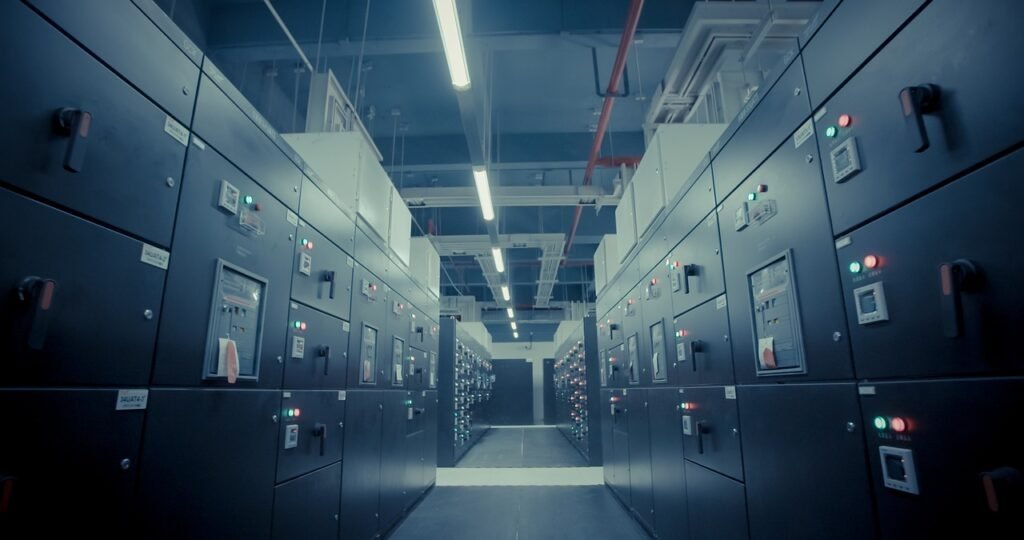
Telehouse, for instance, offers data center colocation solutions designed to provide “maximum connectivity.” Their proposition includes enabling businesses to “make vital connections,” “make new connections to improve and diversify services,” and “deliver content faster.” Furthermore, they provide “direct access to the most important internet exchanges across the world” and the ability to “connect directly to a range of the world’s leading public and private cloud providers.” This level of connectivity is not merely about speed; it’s about building an ecosystem that can support the intricate demands of advanced AI, especially when that AI is designed to work in concert with human decision-makers.
The “Human Angle” in Infrastructure: Bridging the Business Adoption Gap
While consumer AI usage soared in 2024, business adoption lagged. This disparity, as noted by Velastegui, presents a significant challenge for B2B decision-makers. The ideal scenario for human-centric AI involves augmenting human skills, enabling professionals to perform at higher levels. However, realizing this vision requires more than just sophisticated AI models; it necessitates an infrastructure that facilitates seamless integration and accessibility for human users.
The “human angle” in infrastructure translates to ensuring that the physical and network foundations of AI are designed with human interaction and augmentation in mind. This means:
- Low Latency for Real-Time Augmentation: For AI to provide timely insights or support to human decision-makers, data must be processed and delivered with minimal delay. Strategically located data centers, like those offered by Telehouse, which grant direct access to internet exchanges and cloud providers, are crucial for minimizing latency. This is particularly important for applications where AI assists in real-time analysis or interactive decision-making.
- Scalability to Accommodate Evolving Human Roles: As AI transforms job roles, the underlying infrastructure must be able to scale dynamically. The TalentNeuron research indicating a 40% skill shift in jobs implies that the demands on technology will also fluctuate. A flexible colocation solution allows businesses to scale their IT resources up or down as their AI implementation and workforce needs evolve, ensuring that human employees are not hindered by infrastructure limitations.
- Secure and Reliable Access: Human-centric AI relies on trust. Businesses must ensure that the data processed and the insights generated are secure and consistently accessible. Data centers provide a secure, controlled environment for critical IT infrastructure, offering physical security, redundant power, and cooling systems that are essential for maintaining the operational integrity of AI systems that human employees depend on.
- Interconnectivity for Hybrid AI Models: The future of AI is likely to be hybrid, combining on-premises solutions with cloud-based services. Telehouse’s ability to offer direct connections to multiple cloud providers facilitates this hybrid approach, allowing businesses to architect AI solutions that best suit their needs and provide human users with a unified, efficient experience, regardless of where the AI processing occurs.
The challenges identified in 2024, such as energy consumption and hardware shortages, also have a human dimension. Sustainable and efficient infrastructure choices can impact the long-term viability of AI adoption and, consequently, the ability of businesses to invest in and train their human workforce. Choosing infrastructure partners who prioritize efficiency and environmental responsibility can contribute to a more sustainable AI future.
The IdeasCreate Solution Framework: Building for Human-Centric AI Success
For B2B decision-makers aiming to navigate the evolving AI landscape and truly implement human-centric AI in 2025, a structured approach is essential. IdeasCreate recognizes that the successful integration of AI extends beyond selecting the right algorithms; it hinges on a deep understanding of how technology interacts with people and the strategic choices made regarding foundational infrastructure.
The IdeasCreate Solution Framework is designed to address the multifaceted challenges of AI implementation by focusing on three core pillars:
1. Strategic Infrastructure Alignment: This pillar emphasizes the critical role of robust IT infrastructure. IdeasCreate partners with clients to assess their current infrastructure capabilities and identify how they align with their AI ambitions. This includes evaluating the need for high-connectivity data center solutions, such as those offered by Telehouse, to ensure low latency, scalability, and secure access for AI-powered tools. The goal is to build an infrastructure that not only supports advanced AI but also enables seamless human interaction and augmentation. By leveraging strategically placed data centers, businesses can ensure their AI initiatives are built on a foundation of reliability and speed, crucial for real-time decision support.
2. Talent Augmentation and Upskilling: Drawing from research like TalentNeuron’s findings on the 40% skill shift, IdeasCreate prioritizes the human element. The framework focuses on identifying which aspects of roles can be augmented by AI and which require uniquely human skills. This involves comprehensive training programs designed to equip employees with the digital dexterity and AI literacy needed to work effectively alongside intelligent systems. Instead of focusing on replacement, the emphasis is on empowering the existing workforce. This includes training on how to interpret AI-generated insights, leverage AI-powered tools for enhanced productivity, and adapt to evolving job functions.
3. Cultural Integration and Change Management: The most advanced AI technology will fail if it is not embraced by the organization. IdeasCreate’s framework includes a robust change management component to foster a culture that is receptive to AI. This involves clear communication about the benefits of human-centric AI, addressing employee concerns, and creating an environment where experimentation and learning are encouraged. By ensuring that AI is perceived as a tool for empowerment rather than a threat, organizations can achieve higher adoption rates and unlock the full potential of their AI investments. This cultural shift is vital for bridging the gap between consumer AI enthusiasm and slower business adoption, ensuring that AI serves to enhance human capabilities within the organizational context.
This holistic approach ensures that AI implementation is not a purely technical endeavor but a strategic transformation that prioritizes human potential and organizational success.
Conclusion: Future-Proofing Your B2B Strategy with Human-Centric AI
The year 2024 has served as a crucial learning period for the integration of artificial intelligence, highlighting both the rapid advancements in AI technology and the persistent challenges in business adoption. As B2B decision-makers look towards 2025, the imperative to move beyond theoretical AI applications and focus on tangible, impactful implementations is clear. The source material underscores that success in this new era is not solely dependent on sophisticated algorithms but equally, if not more so, on the foundational infrastructure that supports AI and the deliberate integration of AI with human capabilities.
The emphasis on human-centric AI is not merely a trend; it is a strategic necessity. By recognizing that AI’s true value lies in augmenting human intelligence and skills, businesses can unlock new levels of efficiency, innovation, and decision-making. This requires a conscious effort to build systems that empower employees, fostering a collaborative environment where humans and AI work in synergy. Companies like Telehouse demonstrate the critical role of strategic data centers in providing the high-connectivity, scalable, and secure infrastructure needed to support these advanced AI initiatives.
The 40% skill shift observed in jobs between 2016 and 2019 is a powerful indicator that static approaches to workforce planning are