
AI’s 2024 Pivot: Navigating the “Left & Right Brain” Convergence for Human-Centric B2B Strategies
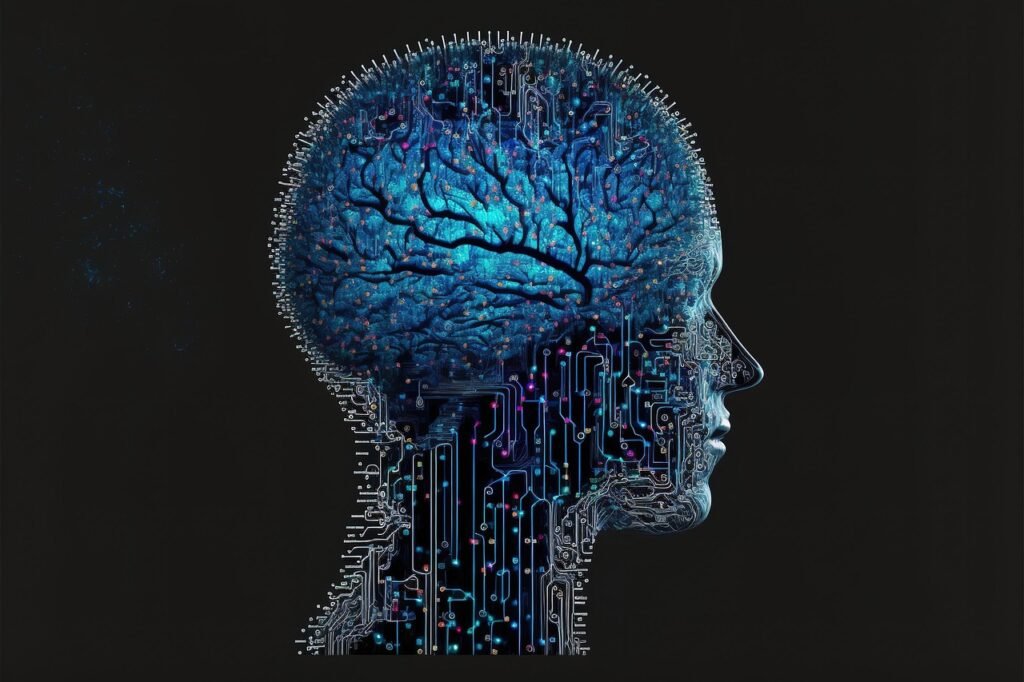
As 2025 dawns, the artificial intelligence landscape is undeniably dynamic, marked by rapid technological advancements and a growing, albeit sometimes hesitant, adoption in the business world. While generative AI has captured significant attention, particularly among Chief Marketing Officers (CMOs) with adoption rates exceeding 70% in some sectors, the true potential for B2B decision-makers lies in understanding and integrating a more nuanced form of AI. This emerging trend, the convergence of “left and right brain” AI, promises to unlock strategic impact by not only automating tasks but also augmenting human creativity and analytical prowess. This evolution, observed throughout 2024 and poised for greater significance in the coming year, necessitates a fundamental re-evaluation of talent strategies and a commitment to human-centric implementation.
The past few years, particularly 2024, have been described as “extraordinary” for artificial intelligence. The AI magazine notes that this year may have “marked the beginning of the AI era proper,” characterized by “technological breakthroughs, innovative applications and huge financial growth.” This growth has seen AI embed itself across diverse sectors, from healthcare and finance to entertainment and agriculture. However, this rapid expansion has not been without its challenges, including “increased regulation and ethical debates, to discussions about energy consumption and hardware shortages.” Amidst this technological surge, a critical shift is occurring, moving the conversation from what AI can do to what it should do for humanity. This perspective, championed by organizations like LADYACT, emphasizes “empowerment, ethics, and positive action,” highlighting the mainstreaming of “Ethical AI” as a significant trend.
While generative AI has demonstrated remarkable capabilities in content creation and task automation, its true strategic value for B2B organizations is amplified when paired with analytical and logical AI systems—effectively, the “left and right brain” of artificial intelligence. This concept, which moves beyond purely generative functions, integrates AI’s capacity for data analysis, pattern recognition, and predictive modeling with its ability to create and innovate.
For B2B decision-makers, this means leveraging AI not just for drafting marketing copy or summarizing reports, but for deeper strategic insights. Imagine an AI system that can analyze vast datasets to identify emerging market trends (left brain) and then, using generative capabilities, propose novel product development strategies or marketing campaigns to capitalize on those trends (right brain). This synergistic approach allows businesses to move beyond routine automation towards more complex problem-solving and strategic foresight.
Research from TalentNeuron underscores the dynamic nature of the job market, finding that “three-quarters of jobs had more than 40% of their required skills change between 2016 and 2019.” This rapid skill evolution, driven by technological advancements like AI, suggests that “static roles are no longer an effective way for organizations to think about building the future workplace.” The “left and right brain” AI model directly addresses this by augmenting existing human roles, rather than seeking to replace them. It empowers professionals to tackle more sophisticated challenges by offloading routine analytical or creative tasks, freeing them to focus on higher-level strategic thinking, human interaction, and complex decision-making.
The Human Angle: Navigating Skill Gaps and Cultural Integration
The increasing sophistication of AI, particularly the “left and right brain” convergence, presents a significant “human angle” challenge for B2B organizations. The rapid evolution of job requirements, as highlighted by the 40% skill shift observed in TalentNeuron’s research, necessitates a proactive approach to talent development. Organizations cannot simply adopt advanced AI tools without considering how their workforce will interact with and benefit from them.
The core of this challenge lies in ensuring that AI implementation is human-centric. This means focusing on augmenting human capabilities, fostering collaboration between humans and AI, and ensuring that AI serves to empower employees rather than displace them. The conversation has firmly shifted, as LADYACT notes, from “what AI can do to what it should do for humanity.” For B2B decision-makers, this translates to prioritizing AI’s role in enhancing human potential, driving innovation through human-AI partnerships, and ensuring an “equitable future.”
A key aspect of this human-centric approach involves addressing the growing skill gaps. As AI takes on more complex analytical and generative tasks, employees will need to develop new competencies, including AI literacy, data interpretation, ethical AI deployment, and the ability to collaborate effectively with AI systems. This is not merely about technical proficiency; it also involves cultivating critical thinking, creativity, and emotional intelligence—skills that remain uniquely human and become even more valuable in an AI-augmented workplace.
Furthermore, successful AI integration requires a strong emphasis on cultural fit. Introducing advanced AI tools without adequate training and without fostering an environment that embraces AI as a collaborative partner can lead to resistance, anxiety, and underutilization of the technology. Organizations must actively work to build trust, communicate the benefits of AI augmentation, and involve employees in the implementation process. This empathetic approach is crucial for ensuring that AI becomes a tool for empowerment and growth, rather than a source of disruption.
The IdeasCreate Solution Framework: Training, Culture, and Strategic Augmentation
To navigate the complexities of implementing “left and right brain” AI effectively, a structured and human-centric framework is essential. IdeasCreate proposes a solution that prioritizes staff training, cultural integration, and strategic augmentation to ensure that AI investments deliver maximum value by empowering the human workforce.
1. Comprehensive Staff Training and Upskilling: The cornerstone of IdeasCreate’s approach is a robust training program designed to equip employees with the necessary skills to work alongside advanced AI systems. This goes beyond basic AI literacy. For “left brain” AI applications, training would focus on data interpretation, critical analysis of AI-generated insights, and understanding the underlying logic of predictive models. For “right brain” AI, training would emphasize creative collaboration, prompt engineering, ethical content generation, and the strategic application of AI-generated ideas. This multi-faceted training ensures that employees can effectively leverage AI tools to enhance their performance and contribute to higher-level strategic initiatives, directly addressing the 40% skill transformation mentioned in industry research.
2. Fostering a Culture of AI Collaboration: IdeasCreate understands that technology adoption is as much about culture as it is about tools. The framework emphasizes cultivating an organizational culture that embraces AI as a collaborative partner. This involves transparent communication about AI’s role in augmenting human capabilities, celebrating successful human-AI partnerships, and creating forums for employees to share experiences and best practices. By promoting an environment of trust and continuous learning, organizations can mitigate anxieties associated with AI and foster a proactive mindset towards its integration. This aligns with the growing trend towards “responsible AI,” moving from principle to practice.
3. Strategic Augmentation for B2B Impact: The ultimate goal of IdeasCreate’s framework is to achieve strategic augmentation, where AI enhances human decision-making and drives measurable business outcomes. This involves identifying key business processes where the convergence of “left and right brain” AI can yield the most significant impact. For instance, in B2B marketing, AI can analyze customer data to identify high-potential leads (left brain) and then assist in crafting personalized outreach campaigns that resonate deeply with those prospects (right brain). This integrated approach allows B2B decision-makers to move beyond transactional tasks and focus on building stronger customer relationships and driving long-term growth. The framework aims to transform AI from a mere operational tool into a strategic asset that amplifies human ingenuity.
Conclusion: Embracing the Augmented Future
As 2025 unfolds, the narrative around artificial intelligence is increasingly centered on its capacity to augment human intelligence and creativity. The convergence of “left and right brain” AI offers B2B decision-makers a powerful pathway to unlock new levels of strategic insight and innovation. This is not a future where AI replaces humans, but one where it empowers them to achieve more. The rapid evolution of job skills, highlighted by industry research, underscores the critical need for organizations to adapt their talent strategies and embrace a human-centric approach to AI implementation. By prioritizing comprehensive training, fostering a collaborative culture, and strategically leveraging AI to augment human capabilities, businesses can position themselves for sustained growth and competitive advantage in the evolving AI landscape.
Call to Action:
To explore how your organization can harness the power of human-centric AI and the “left and right brain” convergence for strategic B2B impact, contact IdeasCreate for a custom consultation. Discover how to future-proof your talent strategy and drive meaningful innovation.